

Data Center Site Selection in 2026: Due Diligence Mistakes That Create Long-Term Risk
In 2026, data center projects rarely fail because of execution. They fail because of site selection decisions made before construction ever begins. This article breaks down the due diligence mistakes that quietly create long-term risk across power, permitting, scalability, and operations.

In 2026, most data center projects do not fail because of execution. They fail because of decisions made before a shovel ever hits the ground.
Site selection is often treated as a real estate exercise, or worse, a box to check so capital can move forward. Land is secured, timelines are announced, and optimism fills the gap where due diligence should have been deeper.
The result is not immediate failure. It is delayed risk that surfaces months or years later, when options are limited and consequences are expensive.
This is where many data center programs quietly lose leverage.
Why Site Selection Has Become a Strategic Risk Category
The data center market has changed. Demand remains strong, but constraints are tighter, scrutiny is higher, and tolerance for surprises is lower.
In prior cycles, site selection focused on speed. Proximity to fiber, available acreage, and incentive packages were often enough to greenlight development.
In 2026, those inputs are no longer sufficient.
Power availability is uncertain, jurisdictions are more cautious and community response is less predictable. As a result, utility timelines are not aligned with capital expectations.
Yet many site decisions are still being made as if the environment has not shifted.
That mismatch is where long term risk begins.
Mistake One: Treating Power as a Future Problem
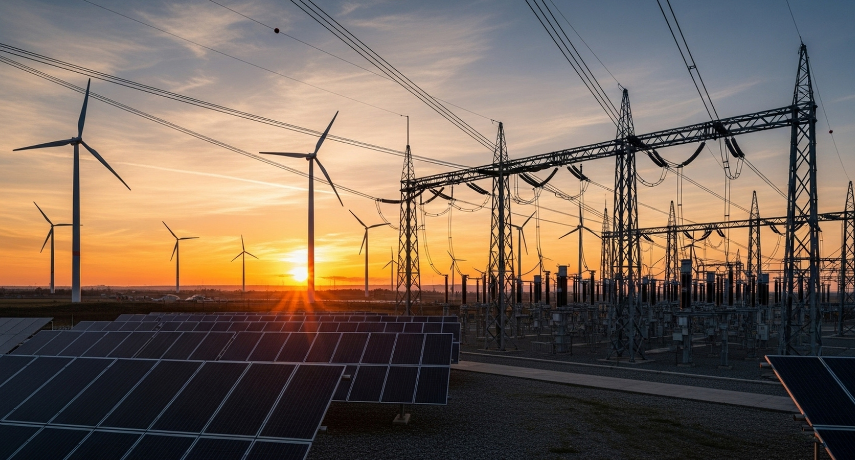
Power is no longer a given. It is the single most decisive constraint in data center development, and it is often the most misunderstood during site selection.
Common assumptions still show up in early planning:
- Power will be available by the time we need it
- The utility has capacity somewhere nearby
- Temporary solutions can bridge the gap
In reality, grid upgrades, substation builds, and transmission approvals operate on timelines that do not bend easily. Once a site is locked in, power constraints become structural, not tactical.
When power availability is assumed rather than verified, schedules become aspirational instead of executable.
Mistake Two: Underestimating Jurisdictional Friction
Zoning approvals, environmental reviews, and permitting processes vary widely by region. What moves quickly in one market can stall indefinitely in another.
Many site decisions rely on high level assessments or precedent from unrelated projects. What gets missed are the specifics:
- Local political climate
- Regulatory backlog
- Environmental sensitivity
- Water usage scrutiny
- Noise and traffic concerns
These factors rarely stop a project outright. Instead, they slow it down, fragment approvals, and force scope changes that were never modeled early.
Jurisdictional friction does not show up in site selection decks. It shows up in change orders and revised timelines.
Mistake Three: Optimizing for Land Cost Instead of Scalability
Lower land cost can be attractive, especially when paired with incentive packages. But low cost sites often come with hidden limitations.
Scalability constraints tend to surface later:
- Limited expansion acreage
- Power density ceilings
- Cooling or water limitations
- Inflexible zoning conditions
A site that works for phase one may quietly cap future growth. When demand outpaces initial assumptions, the project is forced into inefficient expansion or secondary site acquisition.
What looked economical upfront becomes expensive over time.
Mistake Four: Separating Site Selection From Operational Reality
Site selection is often handled upstream by development teams, with operations considerations deferred until later phases.
This separation creates blind spots:
- Access challenges for long term operations
- Staffing commute and regional labor pool considerations
- Emergency response limitations
- Infrastructure redundancy constraints
While operations may not be the headline during site acquisition, operational friction compounds over the life of the facility.
A site that is difficult to operate will never perform as efficiently as one designed with long term realities in mind.
Mistake Five: Assuming Speed Equals Certainty
Fast site acquisition can feel like progress. In competitive markets, speed is often rewarded internally.
But speed without certainty creates fragility.
Sites move forward with unresolved questions around power delivery, permitting sequences, or infrastructure dependencies. These questions are deferred, not solved.
When answers arrive later, they rarely align with original assumptions.
Certainty is not the absence of delay. It is the presence of validated constraints.
What Strong Site Due Diligence Looks Like in 2026
Effective site selection in 2026 is less about optimism and more about pressure testing reality.
Strong due diligence includes:
- Confirmed power timelines, not estimates
- Clear jurisdictional pathways, not general familiarity
- Expansion modeling beyond phase one
- Alignment between development, operations, and long term strategy
- Scenario planning for delays, not best case assumptions
This level of diligence may slow early momentum, but it protects downstream execution.
Why These Decisions Matter Long After Site Selection
Once a site is chosen, most leverage disappears.
Schedules, staffing, procurement, and capital deployment all stack on top of that foundational decision. When constraints surface later, they affect every downstream function.
This is why site selection mistakes rarely show up as site selection problems. They surface as:
- Schedule compression
- Cost escalation
- Scope reduction
- Operational inefficiencies
- Reputation risk with partners and communities
By the time these issues are visible, the decision window has already closed.

The Strategic Shift Owners Are Making
Owners and developers who are adapting fastest in 2026 are reframing site selection as a strategic risk decision, not a real estate transaction.
They are asking harder questions earlier and validating assumptions before announcing timelines. They are willing to walk away from sites that look attractive but fail under scrutiny.
This discipline does not eliminate risk, but it makes risk visible while it is still manageable.
Final Thought
Data center projects rarely collapse because of what happens on site. They struggle because of what was decided before the site was ever chosen.
In 2026, site selection is no longer about finding land. It is about choosing constraints you can live with for the life of the facility.
The projects that succeed are not the ones that move fastest at the beginning. They are the ones that make fewer irreversible decisions based on incomplete information.