

Inside the Data Center Talent Shortage: What’s Driving the Global Hiring Crunch
The data-center industry is expanding faster than the talent needed to sustain it. As AI, cloud, and hyperscale growth accelerate, workforce shortages in engineering, construction, and operations have become the industry’s biggest constraint. Here’s what’s driving the global hiring crunch and how operators can build resilient teams that scale.

The data-center industry is experiencing unprecedented expansion, powered by AI, cloud adoption, and hyperscale growth across nearly every region. But behind the headlines of billion-dollar investments and record-breaking capacity builds lies a quieter crisis: there simply aren’t enough skilled professionals to keep pace.
From construction managers to critical-facilities engineers, workforce shortages are becoming the biggest obstacle to the industry’s growth trajectory.
How Big Is the Gap?
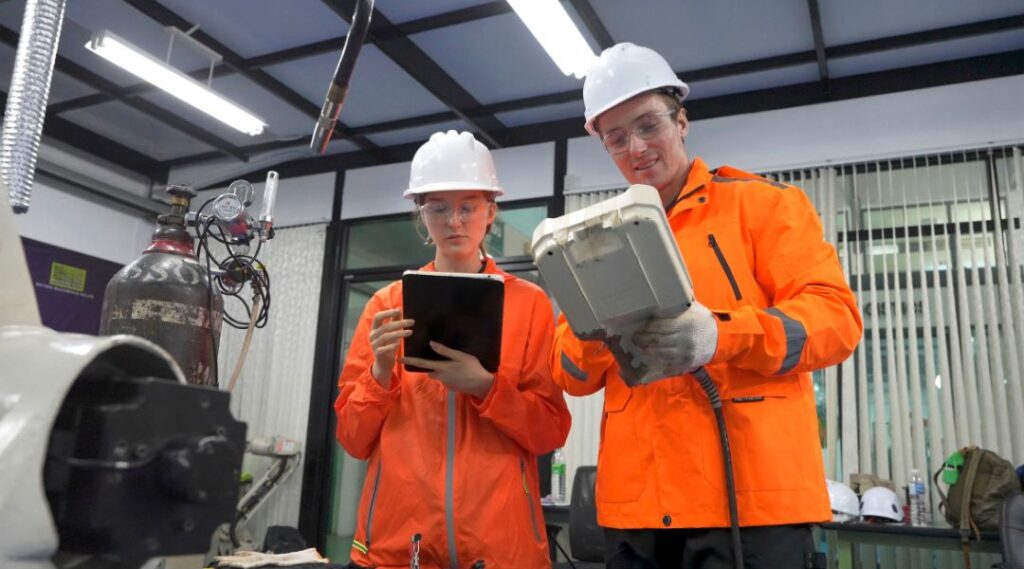
The Uptime Institute estimates that global demand for data-center personnel will exceed 2.3 million roles by 2026.
However, more than half of operators still struggle to hire for technical and operations positions.
Although power and cooling infrastructure can scale quickly, talent pipelines cannot.
As a result, building a skilled workforce requires time, training, and consistent development.
Currently, the industry lacks all three.
Skilled-trade roles are especially difficult to hire.
In particular, electrical, mechanical, and controls engineering roles remain the hardest to fill.
In fact, demand has surged far beyond supply.
Because of this shortage, data centers now compete not only with one another but also with manufacturing, utilities, and renewable-energy companies for the same limited labor pool.

What’s Driving the Shortage
Multiple macro trends have converged to create this global hiring crunch:
- The AI and Hyperscale Boom
AI workloads require GPU-dense environments and high-density cooling systems. Every new hyperscale or edge facility demands hundreds of specialized workers who understand both construction and technology integration. - Limited Training Pipelines
Few universities or trade programs offer dedicated “data-center” curricula. Most professionals learn on the job, meaning it takes years, not months, to replace retiring experts. - Aging Workforce
Nearly 40 percent of mission-critical engineers are approaching retirement. Without structured apprenticeship programs, knowledge transfer is inconsistent and institutional memory is being lost. - Global Expansion Stress
Rapid development in new regions (LATAM, Africa, and secondary U.S. markets) has stretched already-thin labor availability. Skilled workers are being redeployed across projects, creating costly scheduling bottlenecks. - High Burnout and Turnover
Mission-critical environments operate 24/7/365. The combination of high stress, long hours, and limited career advancement options often leads to attrition, compounding the shortage.

The Cost of Inaction
Talent scarcity doesn’t just delay projects; it raises risk across every operational metric:
- Project delays: When electrical or commissioning crews are short-staffed, schedules slip, leading to multimillion-dollar losses.
- Operational downtime: A single unfilled critical-facilities position can disrupt preventive maintenance cycles and compromise uptime.
- Inflated labor costs: Wage competition and retention bonuses are driving up costs industry-wide.
The result: workforce strategy has become a core part of data-center risk management.
Strategies to Build a Resilient Workforce
Forward-thinking operators are responding to the shortage with proactive workforce planning. Leading initiatives include:
- Investing in training partnerships with trade schools and technical colleges.
- Creating mentorship programs that accelerate development for junior engineers.
- Partnering with specialized recruiters who understand mission-critical requirements and can identify cross-sector talent.
- Expanding diversity and inclusion efforts to tap underrepresented talent pools.
- Forecasting workforce demand through data analytics which anticipates needs rather than reactions.
In fact, treating people as infrastructure rather than overhead helps operators stabilize growth while preserving timelines and uptime standards.

Where DataCenter TALNT Comes In
At DataCenter TALNT, we help operators, developers, and contractors close the talent gap with precision recruiting and long-term workforce strategy.
Our nationwide network spans construction managers, project controllers, MEP specialists, and critical-facilities engineers, all vetted through rigorous technical screening.
Whether you’re expanding into new markets or scaling AI-ready capacity, TALNT provides the expertise and relationships to build resilient teams that keep your data centers running 24/7.
“The race for capacity is now a race for people.”
The Takeaway
The data-center industry’s next constraint isn’t power or cooling, it’s people.
Organizations that prioritize workforce strategy today will have the competitive advantage tomorrow.
To build teams that scale with your infrastructure, partner with DataCenter TALNT and strengthen the foundation of your mission-critical operations.